Wear follows traffic
The parts of an apartment building that age first are the shared ones: lifts, stair cores, lobby floors, entrance doors, the water pumps. How fast they wear depends mostly on how many people use them.
A building with one or two homes per floor puts a fraction of the traffic through each of those parts that a building with six or eight per floor does. Fewer trips, fewer door cycles, fewer scuffed landings.
Decisions get made
A building ages well when its owners agree to fix things early. In a society of a dozen households, a waterproofing repair or a lift overhaul is a conversation. In a society of two hundred, it is a campaign, and repairs that are postponed become expensive ones.
The light and air argument is real too
Fewer homes per floor usually means more outside walls per home, which means windows on more than one side. Cross-ventilation and daylight are not only comfort. Rooms that dry out and air through are rooms where finishes last.
What it costs you
Honesty requires the other column. A lift costs roughly the same to maintain whether it serves six homes or sixty, and so does a generator, a security cabin and a society's annual audit. In a low-density building those fixed costs are shared by fewer owners, so the monthly maintenance charge per home is usually higher.
The question to ask is not which charge is lower, but what the charge buys. Ask any society for its last few years of repair spending before you compare two buildings.
How this shapes what we build
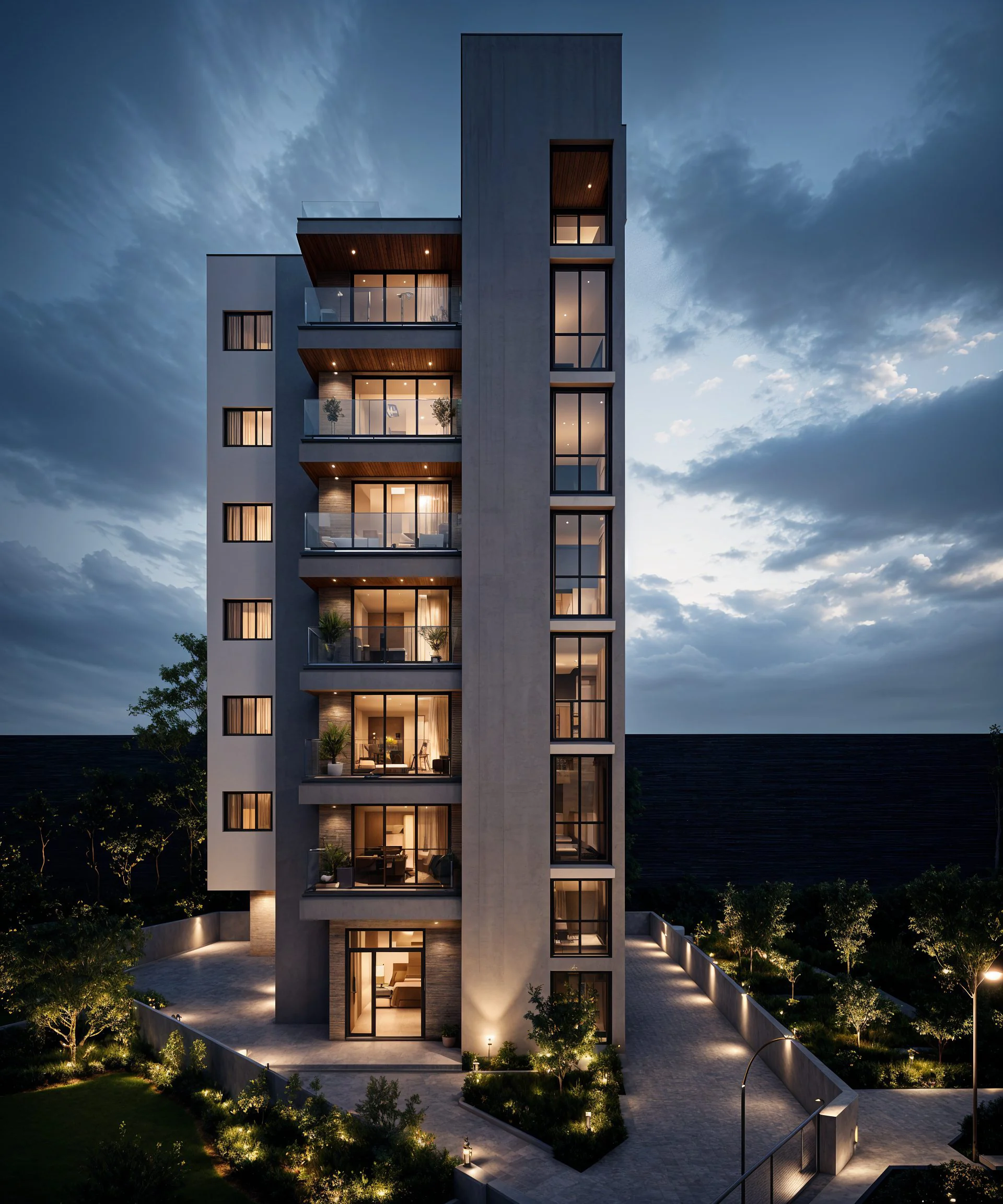
Savali has one home on each of its six floors. Every other project on our list is small by the standards of its neighbourhood. That is a design decision first and a positioning one second.
Common questions
- Is maintenance more expensive in a low-density building?
- Usually, per home. Fixed costs such as lift maintenance, security and audits are shared among fewer owners. Compare what the charge pays for, and ask to see the society's recent repair spending.
- Why do smaller buildings tend to age better?
- Shared parts like lifts, stairs and lobbies see less traffic, and a small society can agree on repairs quickly, so problems are fixed before they grow.